
Work from Anywhere: How Tech Enables Digital Nomad Remote Work
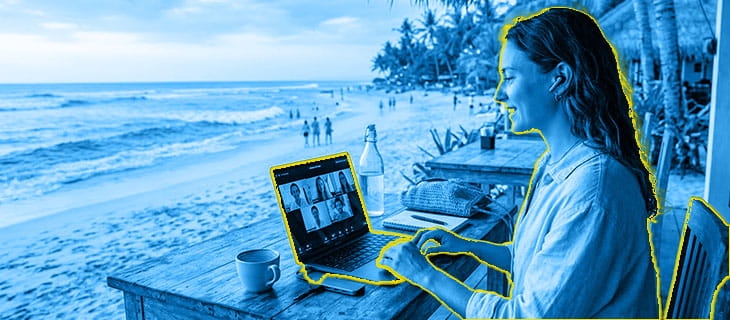
Over the past six years, remote work has moved from a temporary solution to a permanent model, providing nomads in 2026 with the freedom to live where they choose while earning anywhere in the world.
The idea of virtual mobility (the structural possibility of working and living across borders without having to live in the same location as where you receive your paycheck) enabled the rise of the digital nomads.
Now, digital nomads make up a large segment of the global workforce. This article explains how technology is the foundation of borderless migration and thus the growth of the digital nomad community.

The New Global Standard is Remote Work
Most companies used to build their labor forces and teams so that people could work together efficiently and productively from the same office. Now, in the wake of remote work, companies are propagating distributed teams by default rather than by exception.
According to the World Economic Forum, hybrid and remote workforces will continue to increase. This means firms focus more on worker output than on the geographic distribution of workers. Today, firms prioritize reaching the best workers to hire from and the most specialized talent pools, and do so by connecting with workers from other countries.
The Rise of Virtual Mobility
Virtual mobility is when workers earn income from one location while residing in another location. This could mean working in different cities from the one you live in, or in different countries.
The difference between traditional immigration, which requires workers to migrate to their employer’s country, and digital-first migration, which involves migrating to a country that supports remote work (not necessarily the employer’s country), is significant.
This is where the rise of digital nomad visas has come in. Countries such as Portugal, Estonia, and the UAE offer visas that allow remote workers to live there.
To address the rise of virtual mobility, governments have created new tax frameworks to accommodate cross-border earners. Initially, digital nomads struggled because they operated in legal grey areas. Now we see policies catching up as administrative considerations are taken into account, such as permits and banking services for remote workers.

Security Awareness for Remote Workers
The rise of digital nomads and the requirement for security awareness go hand in hand. Considering that most digital nomads use a MacBook for their ecosystem integration and battery life, knowing how to protect it is essential.
Remote work means that contracts, financial data, log-in credentials, and other important information are all stored on a private device. This naturally increases the risks as remote workers’ devices are easier to target than company computer systems.
This is where a helpful blog from Moonlock comes in handy. Staying secure requires accessible and understandable resources. Digital nomads only stand to gain from being well-informed and secure.
As such, companies offer not only a cybersecurity blog for Mac users but also an antivirus and antimalware tool specifically designed to protect everyday Mac users from the threats they may face. Using tools such as these and educating oneself through blogs can help protect against malicious attackers who seek to take advantage of the benefits virtual mobility offers.
The Technical Risks of Remote Work
Remote work increases the attack surface. The use of unsecured WiFi, shared networks, and public workspaces creates potential weaknesses that attackers can exploit.
In fact, an IBM statistic says that 30% of breaches involve stolen or reused credentials, which are easily hijacked by hackers over unsecured network connections. Phishing campaigns, browser hijacking, and more are always targeting remote workers, since their devices often contain valuable company information and are less secure than company-based computers.
Due to these device-level vulnerabilities, cybersecurity must be prioritized to sustain virtual mobility and protect workers from the dangers of remote work. Many digital nomads use a secure VPN network to protect their data, including sensitive company information.

Reshaping Professional Identity
As companies eliminate the need for workers to be physically present at their headquarters, they gain two specific benefits.
The first is already employed workers who now have the ability to work where they feel more comfortable. The second is workers who no longer need to migrate to work.
Given that digital nomads prioritize flexibility over long-term geographical stability, remote work aligns well with their lifestyle.
Gone are the days when workers would stick to single-employer paths to grow within a company. Portfolio-based careers have taken over. With digital nomads not being restricted to their employer’s geographical location, they can grow their portfolios and seek numerous job opportunities.
Furthermore, remote work reshapes professional identity. New skills, such as digital literacy and asynchronous communication, are being prioritized and acquired. The workforce is shifting toward one that emphasizes cultural adaptation and global collaboration, making the most of remote work.
Every Remote Worker’s Stack
Having the proper stack as a remote worker is necessary. Most digital nomads use stacks such as these to make borderless living easier. This section discusses which tools are best to rely on.
Cloud Infrastructure
Leveraging the appropriate SaaS ecosystem and ensuring that file storage, CRM systems, and project management tools are essential. This is where cloud infrastructure serves as the backbone of remote work, as decentralized clouds remove the dependency on physical servers and enable global server distribution.
Communication and Real-Time Collaborative Tools
The ability to video conference reliably, meaning with no or low latency and with transcription, is crucial to productive business meetings. This is where asynchronous work culture tools come in, ensuring that sharing a time zone is not necessary for productivity.
Financial Technology and Cross-Border Payments
It is essential to have a consistent, reliable method for paying digital nomads. Fintech comes, and digital nomads do not have to worry about the currency they are being paid in.
Next, low international transfer fees are essential so that workers do not feel they are not earning enough, as they are losing a portion of their salaries to fees.
Finally, proper digital tax documentation tools are essential to help digital nomads pay their taxes, as earnings sent from another country may confuse not only their own interpretation of tax law but also government officials.
The Hardships of Cloud Living
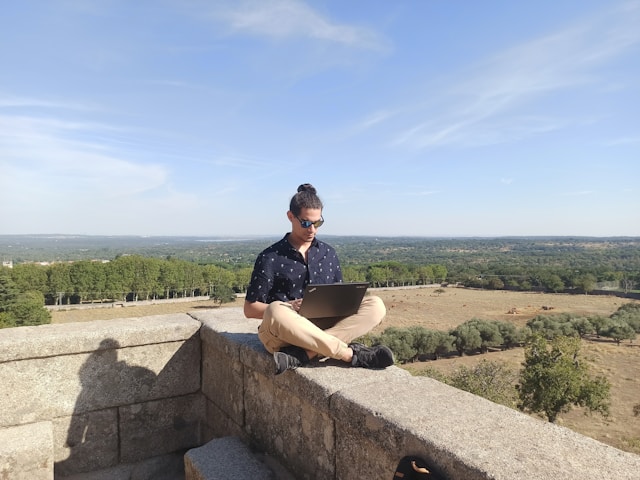
Though there are definitely benefits to working remotely and being a digital nomad, there are also some very real difficulties of cloud living. Time-zone fatigue and boundary management are issues that almost every digital nomad faces as they work hours that coincide with another country’s time rather than their own.
Furthermore, they lack the coworker communities found in the physical workplace. They face the risk of social isolation, as employees usually benefit from global networking.
The Future of Remote Work for Digital Nomads
The era of borderless migration is not temporary; it is a structural change in the workforce. Virtual mobility is completely policy-backed and relevant to global economies. That is why governments adapt tax laws and provide administrative support to remote workers.
Digital nomads are long-term contributors to global economies. They are not simply disposable workers. They are highly sought-after employees who have the luxury now to transcend geographical limitations.
Remote work and cloud living have enabled not only change but also growth in the workforce, benefiting employees and institutions.

You may also enjoy
As more people begin to set their sights on living abroad and gaining residency or even citizenship in foreign countries, golden visas tend to become top of mind. But not…
by Brittany
Every year, the digital nomad visa landscape changes, whether new opportunities pop up or eligibility requirements change. To help you plan (or continue) your journey, we’re sharing the best digital…
by Brittany

A new digital nomad visa has popped up for remote workers… but it’s not like traditional remote worker visas we’ve talked about before. Launched in February 2026, the Bhutan digital…
by Brittany